
Battery recycling
Battery recycling: mechanical pretreatment and hydrometallurgical recovery
How feedstock, mechanical preparation, black-mass quality and wet-chemical recovery connect to product and regulatory targets.
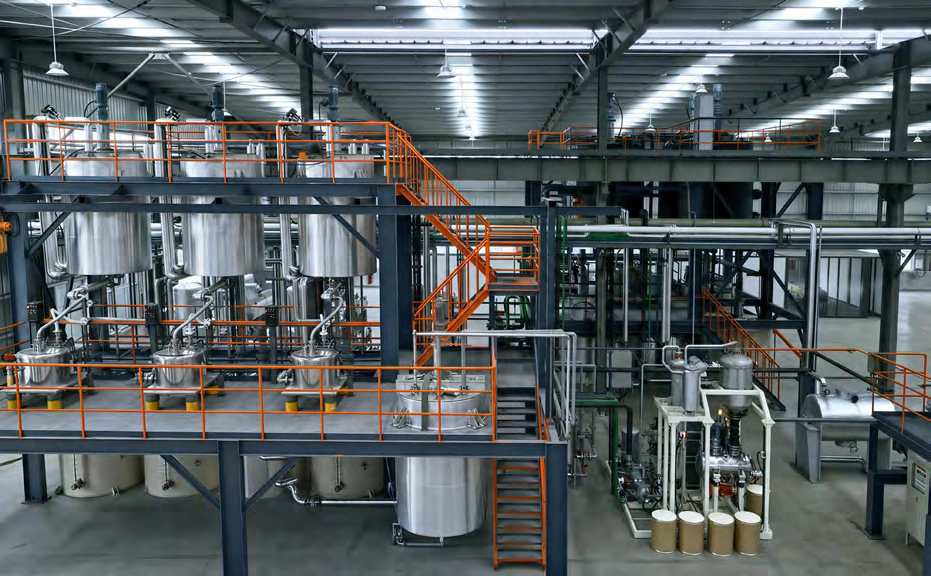
Battery recycling is not one generic line. Mechanical pretreatment prepares and concentrates recoverable fractions; hydrometallurgy dissolves, purifies and recovers selected products. The route must be configured around battery format, chemistry, state of charge, target products, emissions, water balance and local compliance.
Begin with feedstock and the required recovery outcome
The EU Battery Regulation turns recycling into a measurable material-recovery system.
For lithium-based batteries, Regulation (EU) 2023/1542 sets recycling-efficiency targets of 65% by end-2025 and 70% by end-2030. Material-recovery targets rise from 90% to 95% for cobalt, copper and nickel, and from 50% to 80% for lithium, between end-2027 and end-2031.
These are system-level outcomes. A project needs a defined incoming-battery population, sampling plan, mass-balance boundary and recovered-product specification before equipment performance can be evaluated meaningfully.
Separate the route into accountable work packages
Each block has a different safety and quality basis, while the interfaces determine overall recovery.
- 01 · Receive
Identify chemistry, format, condition, charge state and traceability
- 02 · Prepare
Discharge or deactivate, dismantle or shred under a defined safety basis
- 03 · Separate
Concentrate black mass and recover metal, polymer and other fractions
- 04 · Leach
Transfer target metals into solution using chemistry matched to feed
- 05 · Purify
Remove impurities and selectively separate required streams
- 06 · Finish
Precipitate or crystallise, dry, package and qualify products
Mechanical, hydrometallurgical and direct routes solve different problems
A project may combine route families; it should not force every feedstock through one flowsheet.
The U.S. DOE ReCell program treats hydrometallurgical and direct recycling as complementary pathways. Direct recycling can retain more embedded value but requires much tighter chemistry identification and feed purity.
| Route | Purpose | Critical controls | Best-fit question |
|---|---|---|---|
| Mechanical pretreatment | Safe size reduction and physical concentration | Atmosphere, temperature, liberation, PSD and black-mass purity | Can a stable intermediate be made safely? |
| Hydrometallurgy | Dissolve and selectively recover metals | Leach chemistry, impurities, reagent and water balance | Which saleable product forms are required? |
| Direct recycling | Preserve or restore active-material value | Chemistry sorting, contamination, structure and relithiation | Is feed controlled enough to retain cathode value? |
Treat black mass as an engineered interface
A black-mass specification links the mechanical front end to the wet plant and makes losses visible.
Composition
Cathode chemistry, graphite, binder, electrolyte residues, Al, Cu, Fe and moisture.
Physical form
PSD, bulk density, flowability, dustiness and agglomeration.
Mass balance
Yield and distribution of target metals across every separated fraction.
Acceptance
Sampling method, batch definition, analytical method, tolerance and rejection route.
Build the recovery claim from a closed mass balance
A recovery percentage is credible only when the incoming inventory, every output stream and the analytical uncertainty are defined.
For each target element, recovery is the mass of that element in the accepted recovered product divided by its mass in the defined incoming feed. The calculation therefore depends on representative sampling, moisture correction, batch boundaries and analytical methods—not only on equipment throughput.
Water, reagents and residues need the same discipline. Hydrometallurgical yield can look attractive while purge streams, wash liquors, neutralisation solids or off-spec products carry material outside the saleable-product boundary. Closing those streams early changes both equipment sizing and project economics.
| Balance | Measurement basis | What it reveals |
|---|---|---|
| Total mass | As-received and dry mass for feed and every output | Unmeasured hold-up, dust, moisture and sampling losses |
| Elemental | Li, Ni, Co, Mn, Cu, Al, Fe and other project-specific elements | Where target metals and impurities actually report |
| Water | Fresh, recycled, evaporated, entrained and discharged water | Hydraulic load, reuse potential and effluent duty |
| Reagent | Stoichiometric demand, excess, recycle, neutralisation and purge | Consumable cost and secondary-salt generation |
| Product quality | Mass and assay of on-spec, rework and off-spec material | Saleable recovery rather than theoretical extraction |
Close five questions before fixing the flowsheet
The same equipment list can produce different recovery and economics depending on these decisions.
| Question | Required evidence | Decision enabled |
|---|---|---|
| What arrives? | Chemistry / format mix, condition, volume and variability | Reception and pretreatment basis |
| What is sold? | Product form, purity, qualification and offtake | Separation sequence |
| Where are losses? | Stream mass balance and sampling plan | Recovery improvement and guarantees |
| What leaves site? | Wastewater, off-gas and secondary materials | Permitting and treatment systems |
| How is performance accepted? | Feed, duration and analytical protocol | FAT and performance acceptance |
Evidence and sources
- S1
- S2
- S3ReCell Center fact sheet ↗
Argonne National Laboratory / U.S. DOE · 2019
- S4ReCell Advanced Battery Recycling Center fact sheet ↗
Argonne National Laboratory / U.S. DOE · 2021
Numerical values are presented with their regulatory or study context. Study conditions are not represented as universal commercial setpoints. EQM engineering frameworks are identified separately from cited external facts.
Frequently asked questions
Is battery recycling only a dry mechanical process?
No. Mechanical pretreatment is normally a front-end concentration step. Many projects add hydrometallurgical recovery; controlled feedstocks may also support direct-recycling approaches.
What does EQM provide for a recycling project?
EQM can support process definition, line integration, black-mass interface definition, pilot and sample programs, and technical-commercial project coordination.