
Circular manufacturing
Spent saggar recycling for industrial reuse
A qualification-led route from spent ceramic collection and zoning to preparation, separation, testing and industrial reuse.
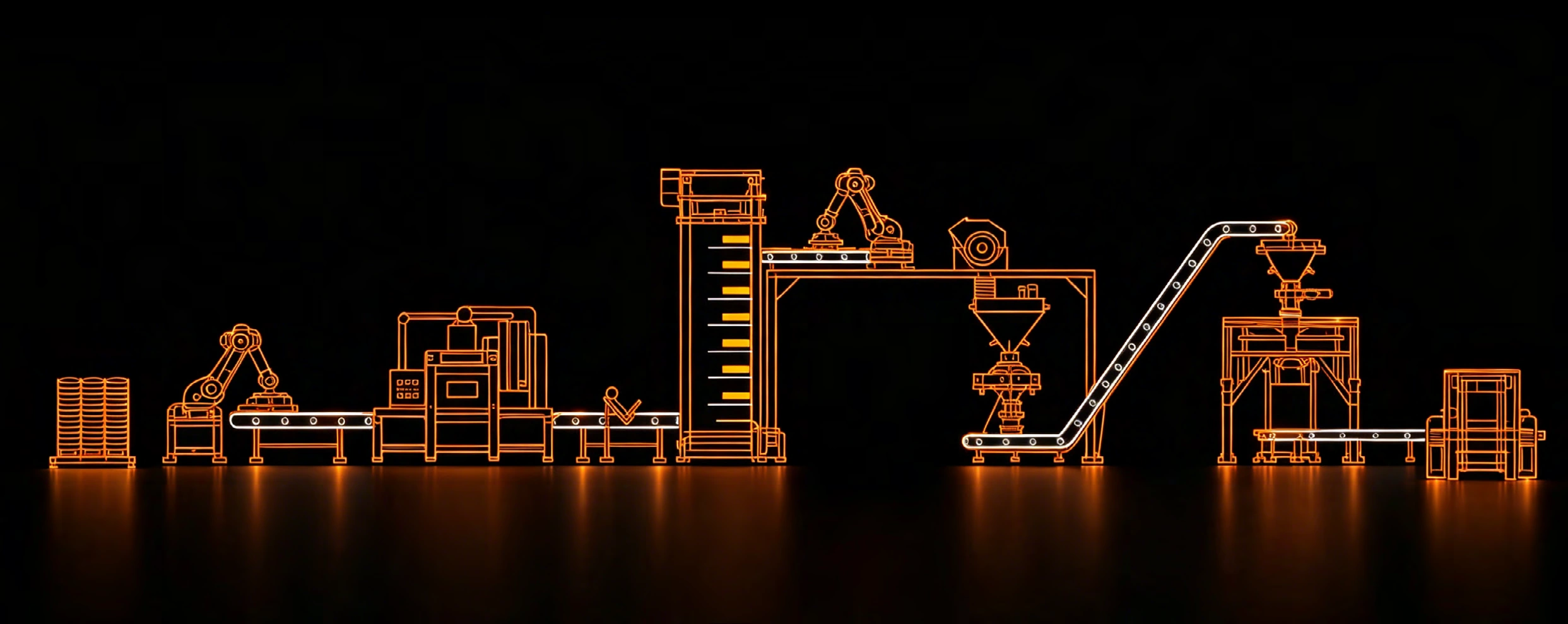
Spent-saggar recycling is not simply crushing ceramic waste. Battery-material exposure creates chemically and physically different zones in the saggar. A credible route separates collection lots, characterises contamination and penetration, prepares controlled fractions, and qualifies those fractions against a specific receiving process.
Understand how the saggar changed in service
Thermal cycling, lithium compounds and cathode powders can alter the working face, pores and matrix differently.
Published work reports NMC calcination in the 750–1000 °C range. Repeated exposure drives thermal shock, chemical reaction and penetration into the ceramic. One study reported relative reactivity of common components as SiO2 > Al2O3 > MgO under its test conditions.
A separate waste-saggar study distinguished attached, hardened, permeable and matrix zones. It measured maximum lithium penetration of about 2 mm and cobalt penetration of about 200 μm in the studied samples. These are diagnostic results—not universal trimming or acceptance limits.
Use a circular hierarchy before choosing a crusher
The best route may begin by extending life or separating higher-value material before size reduction.
- 01 · Prevent
Improve material, coating, loading and operation to extend service life
- 02 · Segregate
Keep source, chemistry, campaign and condition traceable
- 03 · Zone
Assess reacted face and inner matrix rather than treating the piece as uniform
- 04 · Prepare
Crush, screen, classify and separate to a defined fraction
- 05 · Qualify
Test chemistry, PSD and performance against a named reuse route
Design sampling and qualification around the buyer
Recovered ceramic becomes a product only when a downstream user accepts a controlled specification.
| Gate | Minimum evidence | Why it matters |
|---|---|---|
| Lot definition | Producer, composition, cathode chemistry, campaigns and rejection reason | Prevents uncontrolled mixing |
| Representative sampling | Whole-piece zoning and composite method | Avoids bias toward clean matrix or reacted face |
| Physical preparation | PSD, fines, magnetic fraction, moisture and yield | Defines equipment and handling |
| Chemical characterisation | Major oxides, Li / transition metals and critical impurities | Determines reuse options |
| Application trial | Dose, process behavior, product performance and limits | Converts composition into industrial evidence |
Use public case data to frame the opportunity—then remeasure the real feed
A published Chinese LCA demonstrates both the potential value and the importance of a complete process inventory.
The 2023 case study cites five to 20 uses before saggars are discarded and estimates 80 million scrapped ceramic saggars per year in China containing more than 20,000 tonnes of lithium, nickel, cobalt, manganese and other battery-material metals. These are literature estimates for a defined geography and period, not an EQM forecast.
For the study's processing basis of 1,000 kg of waste saggar, its reported purification route produced 5 kg of battery-grade nickel-cobalt-manganese precursor and 28.2 kg of battery-grade lithium carbonate. The same inventory reported 68 kg of wastewater and 1.8 kg of calcium- and magnesium-containing solid waste at the purification stage. The material-input/output difference for each of five production processes was reported below 0.5%.
The engineering lesson is not to copy those yields. It is to establish how much value sits in the attached layer, what remains in the ceramic body, which reagents and recycle loops are required, and whether the resulting products and residues have qualified destinations.
| Basis / output | Reported value | How EQM would use it |
|---|---|---|
| Waste-saggar basis | 1,000 kg | Normalise campaign data and compare source lots |
| Battery-grade NCM precursor | 5.0 kg | Test whether recovered transition metals meet a real product route |
| Battery-grade lithium carbonate | 28.2 kg | Evaluate lithium recovery, purification and buyer specification |
| Wastewater at purification | 68 kg | Define water treatment, recycle and discharge boundaries |
| Reported process consistency | <0.5% input-output difference | Set a transparent balance-closure requirement |
Sources: S4
Make the regional system as rigorous as the process
Collection density, transport status, local processing and offtake determine commercial practicality.
Collection
Standard containers, lot identity, condition inspection and weight evidence.
Classification
Confirm applicable waste / product status and cross-border controls.
Processing
Locate preparation where dust, yield, energy and transport can be controlled.
Offtake
Qualify reuse routes and define a fallback for off-spec fractions.
Evidence and sources
- S1Materials for improved lifetime of saggar in production of Li-ion cathode powders ↗
International Journal of Applied Ceramic Technology · 2024
- S2
- S3Damage mechanism and design optimization of mullite-cordierite saggar ↗
Journal of the European Ceramic Society · 2022
- S4
Numerical values are presented with their regulatory or study context. Study conditions are not represented as universal commercial setpoints. EQM engineering frameworks are identified separately from cited external facts.
Frequently asked questions
Is spent-saggar recycling one of Equimatix's core circular activities?
Yes. EQM develops qualification-led spent-saggar recovery and industrial-reuse pathways supported by regional collection, processing and partner coordination.
Can recovered saggar material be reused automatically?
No. Service history and contamination vary. Reuse requires representative sampling, preparation and application-specific qualification.