Feedstock assessment
Classify service history, ceramic composition and attached material before choosing the recovery route.
 Discuss a project ↗
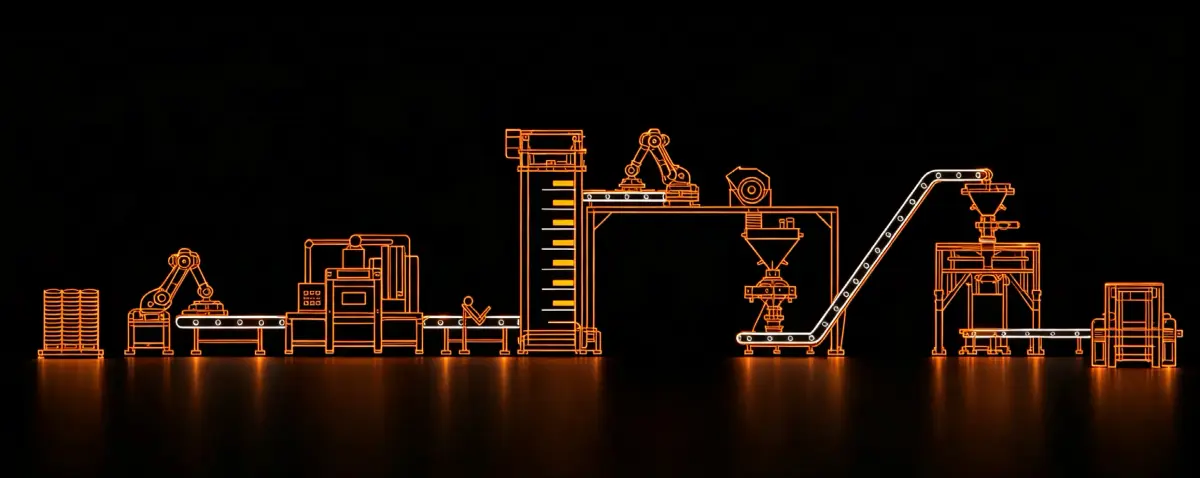
Circular materials · Saggar recovery
Process development and equipment integration for spent-saggar recovery, from source-lot assessment to a receiving industry's material specification.
Representative process illustration · not a customer installation
Who this is for
Classify service history, ceramic composition and attached material before choosing the recovery route.
Connect preparation, size reduction, screening, separation and dust-control interfaces.
Define sample preparation, analytical methods and the receiving application's release criteria.
Representative process route
The final route follows the feed, product requirements and evidence available for your project.
Source lots, condition, composition and contamination.
Sort and remove attached or foreign material.
Controlled crushing and size classification.
Recover fractions against an agreed specification.
Composition, particle properties and application trials.
Prepare the first discussion
Recovered ceramic fractions and any associated cathode-material recovery need separate specifications. Reuse suitability, waste status and local permissions must be established for the actual material and location.
Submit a project brief ↗Project questions
No. Composition, contamination, thermal history and the receiving application's requirements determine the reuse route. A sample and qualification programme is required before release.
Yes. The scope can start with a defined unit operation or work package, such as crushing, screening or separation. Equipment selection follows the feed and product duty; a complete plant is not assumed.
No public recovery rate or selling price is offered. Recovery, quality and commercial viability depend on feed-specific tests, the agreed product boundary and an actual receiving market.